E-commerce
October 1, 2026
Wondering how to multiply sales channels to penetrate the African market? The answer comes down to one word: layering. Foreign brands that succeed in Africa never rely on a single channel. They combine marketplaces, direct online sales, and partnerships with local distributors, all backed by regional logistics providers.
This multichannel approach is crucial because delivery and distribution infrastructure remains fragmented across much of the continent, outside major metropolises like Lagos or Johannesburg. Relying on a single lever means running the risk of seeing your sales quickly hit a ceiling. The key is knowing which channel to prioritize based on your objective: rapid market access, control over the customer experience, or extensive physical distribution.
So how can you multiply sales channels to enter the African market? On the agenda:
Why are marketplaces like Jumia and Konga the easiest point of entry?
How does direct selling allow you to retain control over your brand?
What role do local distributors play in expanding across Africa?
How can you effectively layer sales channels within the same market?
Which strategy should you adopt depending on your brand's stage of development?
Let's dive in.
Summary
Why are African marketplaces the easiest entry point?
For a foreign brand looking to enter the African market quickly, local marketplaces represent the shortest route. Platforms like Jumia and Konga, both based in Lagos, Nigeria, offer a commercial infrastructure that is already in place. They operate primarily as third-party marketplaces, with a small direct retail component.
This approach is particularly well-suited for brands that want to test the waters without investing heavily in logistics. By leveraging these platforms, you benefit from their existing traffic and local payment solutions. Global brands such as Adidas, Samsung, Garnier, and Maybelline have chosen this route on Jumia, while Konga notably hosts Samsung, LG, Xiaomi, CeraVe, and La Roche-Posay.
The main advantage remains the speed of implementation. You don't have to manage the complexities of delivery or customs: the marketplace takes care of it. It is an excellent starting point to validate demand before investing in more demanding channels.

Convert over 2,000 customers on average per month with Qstomy.
The world’s 1st Shopify AI dedicated to customer conversion


Empowering 200+ e-commerce merchants
What are the benefits of direct selling for a foreign brand in Africa?
Brands seeking full control over their pricing, logistics, and customer relationships quickly outgrow marketplaces. Direct selling is particularly popular in the beauty, wellness, dietary supplements, and fashion sectors. These categories require a consistent brand experience and careful communication, which are difficult to maintain through an intermediary.
Take the example of Fenty Beauty, an American brand founded by Rihanna. It ships directly to Nigeria, Kenya, and South Africa, with online stores tailored to each country, local currencies, and customs duties management. For its part, iHerb, a specialist in vitamins and supplements, offers dedicated stores for these same three markets and relies on DHL Express and FedEx for delivery.
The operational burden is heavier, but the reward matches it. You retain control over your brand image and every customer touchpoint. You also collect valuable data about your buyers, which is impossible on a marketplace where the customer belongs to the platform.
How to handle customs fees and taxes for direct sales to Africa?
Direct sales to Africa involve mastering customs formalities, an aspect often underestimated by foreign brands. Each country has its own import regulations, duty rates, and procedures. A mistake at this stage can lead to delivery delays, unexpected costs, and a poor customer experience.
Some brands choose to simplify the process by offering a delivered duty paid service, or delivery-duty-paid. This is the case with iHerb in South Africa: customs duties and import fees are collected directly at checkout, which prevents any unpleasant surprises for the customer upon delivery. This transparency builds trust and reduces cart abandonment.
For brands just starting out, it is recommended to rely on experienced logistics partners who understand local specificities. They can help you calculate actual costs and configure your store to display the correct amounts right from the checkout funnel, a crucial step to avoid friction.
What role do local distributors play in expanding into Africa?
Delivery and distribution infrastructure in Africa remains fragmented, except in major cities such as Johannesburg and Lagos. For brands aiming for broad distribution without managing local warehouses themselves, partnerships with local carriers and wholesalers are essential. This is particularly true in markets where offline commerce still largely dominates.
Building these distribution networks is expensive and slow. Working with existing infrastructure takes off most of that burden. Fenty Beauty products, for example, are available in physical stores in Botswana, Ghana, Kenya, Namibia, Nigeria, South Africa, Zambia, and Zimbabwe. This physical footprint would be impossible to build alone in a short amount of time.
B2B distributors like Wasoko, based in Nairobi, Kenya, supply retailers and informal trade networks across Africa. They offer foreign brands access to retail sales channels that go far beyond direct e-commerce, unlocking considerable opportunities.
How can sales channels be effectively layered in the same market?
In most cases, sales channels in Africa overlap. Brands frequently offer direct international shipping via their own online store, while simultaneously selling on marketplaces, through retailers, and via B2B distributors, all within the same market. This overlap is not a coincidence: it meets complementary needs.
Fenty Beauty perfectly illustrates this strategy. The brand offers direct shipping to Nigeria, Kenya, and South Africa, while maintaining local retail locations in several African countries and a presence on the Konga marketplace. For its part, ColourPop Cosmetics, an American cosmetics brand, sells online to Africa from its international store while relying on local B2B distributors for physical retail sales.
This multichannel approach allows brands to capture different customer segments. Some shoppers prefer the convenience of a marketplace, others the trust of a brand website, and still others the experience of a physical store. By layering channels, you maximize your visibility and revenue.
Which strategy should you adopt based on your brand's stage of development?
African marketplaces are the easiest entry point due to limited shipping and distribution options across much of the continent. For a new brand, they allow you to test demand without major investment. But marketplaces alone are rarely enough to drive long-term growth.
International direct-to-consumer sales and local retail partnerships become viable once demand is predictable. These channels provide control over pricing, logistics, and customer relationships—essential elements for building a lasting brand. Shifting from one channel to another should be done gradually, guided by market signals.
In practice, start with a marketplace to validate your product, then add direct sales once you have identified your best customer segments, and finally roll out distribution partnerships to reach areas where physical retail dominates. Each stage builds on the previous one to strengthen your presence.
How to manage multi-channel logistics and delivery in Africa?
Logistics is the sinews of war when it comes to selling in Africa. Delivery infrastructure remains uneven, and each channel imposes its own constraints. On a marketplace, the platform often manages delivery, but you lose visibility over the customer experience. In direct sales, you must organize transportation, customs, and last-mile delivery yourself.
For brands layering multiple channels, it is essential to work with local logistics providers who understand the specificities of each market. Partners like DHL Express and FedEx, used by iHerb, offer reliable international coverage. For physical distribution, local players like Wasoko provide in-depth knowledge of retail networks.
The key is not to manage everything internally. By relying on local experts, you reduce the risk of errors and focus on your core business: selling and building your brand. Well-managed logistics is also a driver of customer loyalty, as African buyers are sensitive to delivery reliability.
What are the pitfalls to avoid during a multichannel expansion in Africa?
The first pitfall is trying to do everything at once. Launching on a marketplace, via direct sales, and with local distributors right from the start can quickly become unmanageable, especially without in-depth market knowledge. It is better to start with one channel, master it, and then gradually expand your presence.
The second pitfall is neglecting local specificities. Currencies, customs duties, payment preferences, and purchasing habits vary considerably from one country to another. A one-size-fits-all approach is doomed to fail. Each market deserves adaptation, just as Fenty Beauty and iHerb do with their dedicated country-specific stores.
Finally, do not underestimate the importance of customer service. In a market where trust is crucial, a prompt and relevant response can make all the difference. A customer hesitating between two brands will choose the one that offers them the best experience, from the initial visit to delivery. The quality of support is a profitable long-term investment.
How to adapt your online store for African customers?
Adapting your online store for Africa is not just about translating your pages. You need to consider local currencies, payment methods popular on the continent, and international shipping fees. Customers must be able to see prices in their currency and understand delivery times before placing an order.
Brands like Fenty Beauty and iHerb have created dedicated stores for Nigeria, Kenya, and South Africa, with prices in local currency and information on customs duties. This transparency reassures buyers and reduces cart abandonment. A customer who discovers hidden fees at checkout is a lost customer.
Also think about your site's loading speed. On a continent where internet connections can be unstable, a heavy site is a major deterrent. Optimize your images, simplify your pages, and test your store under real-world usage conditions. A smooth experience is a decisive competitive advantage.
How to measure the performance of your sales channels in Africa?
To determine if your multichannel strategy is working, you need to track specific indicators for each channel. Revenue by channel is an initial indicator, but it is not enough. You also need to measure customer acquisition cost, conversion rate, average order value, and return rate.
Comparing channels is essential. A marketplace may generate significant volume but with lower margins, while direct sales offer better margins but require more marketing effort. By analyzing this data, you can adjust your investments and focus your resources on the most profitable channels.
Don't forget to track customer satisfaction by channel. An unsatisfied customer on a marketplace can leave a negative review that damages your reputation. In direct sales, you have more control over the experience, but also more responsibility. Regularly measuring these indicators allows you to continuously optimize your strategy.
How does Qstomy help manage customer requests across multiple channels in Africa?
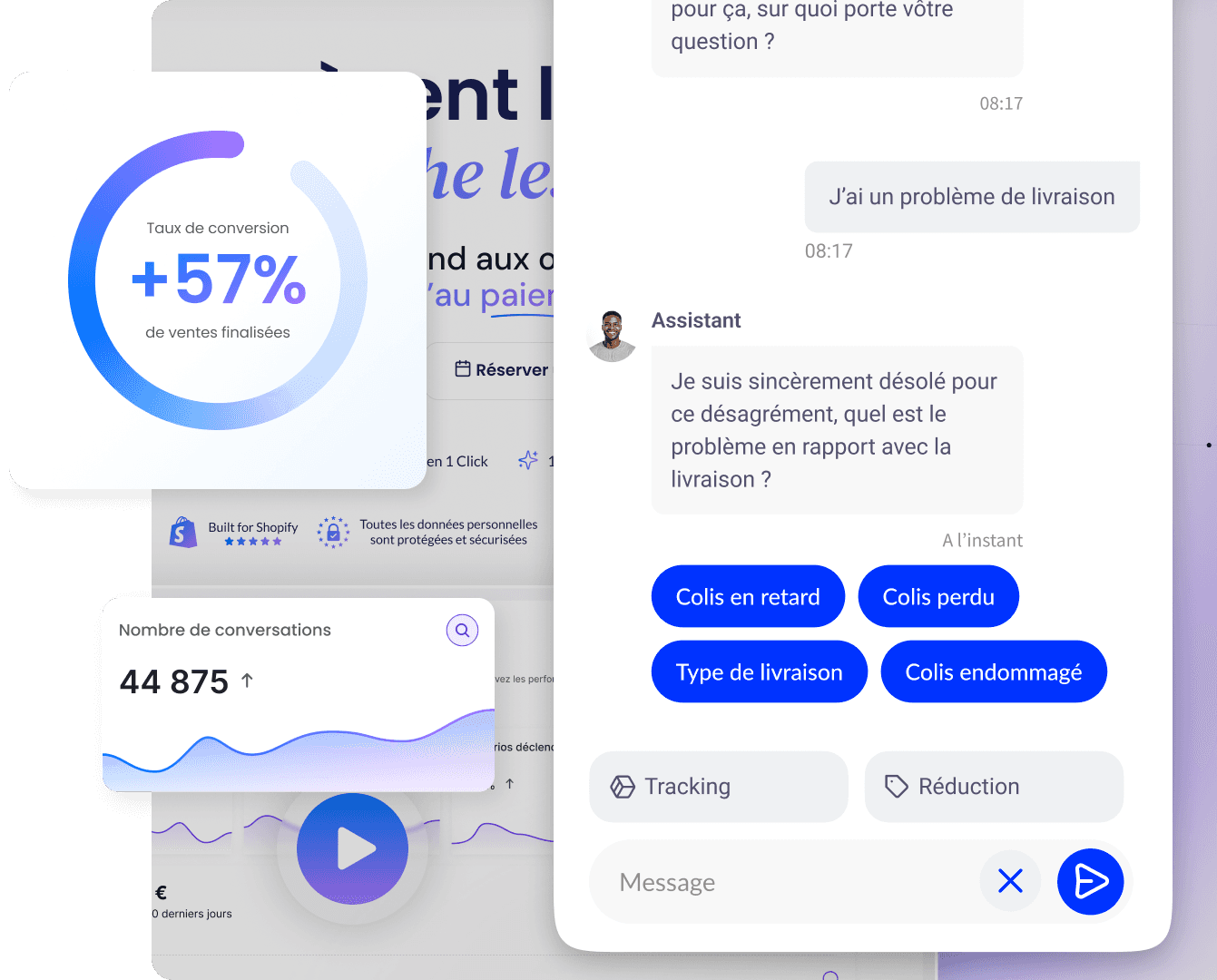
When you sell across multiple channels in Africa, customer questions multiply: delivery times, customs fees, order tracking, product availability. Qstomy, the Shopify AI agent, helps you answer them instantly, 24/7, without overloading your support team. It guides your customers toward purchasing by providing accurate, personalized answers.
Qstomy can handle frequent delivery questions before checkout, such as delivery times to each African country or import fees. It can also track packages and reassure your customers about their order status. By reducing support tickets, it allows you to focus on growing your business across the continent.
The agent integrates with your Shopify store and adapts to your brand's tone, ensuring a consistent experience across all your channels. It helps you convert more visitors into customers, increase average order value through relevant recommendations, and build customer loyalty with high-quality customer service, even from a distance.
Which checklist should you follow before launching a multichannel strategy in Africa?
Before you get started, here is a checklist to structure your approach and maximize your chances of success.
In brief
Marketplace: start with Jumia or Konga to quickly test demand.
Direct sales: add your online store with local currencies and clear customs duties.
Distributors: partner with local players for physical distribution.
Logistics: choose reliable providers for each target market.
Customer support: set up responsive support, ideally automated with Qstomy.
FAQ
Which channel should I prioritize to start in Africa? The marketplace is the simplest entry point, as it provides the infrastructure and traffic.
Should I create a store for each country? It is recommended in order to display prices in local currency and manage customs duties, as Fenty Beauty and iHerb do.
How do I handle returns and after-sales service? By relying on local logistics partners and automating answers to frequently asked questions with Qstomy.
To go further: AI Chatbot for Country Restrictions: Preventing Impossible Sales Before the Checkout Funnel - Qstomy, Brand Tone and AI Chatbot: Maintaining a Consistent Voice in Customer Responses - Qstomy, What E-commerce Strategy for a Small Brand Under $100,000/Month? - Qstomy, How to Deliver an Exceptional Customer Experience in E-commerce? - Qstomy, Customer Support for Local Delivery: Zones, Schedules, Couriers, and Proof of Delivery - Qstomy, How to Manage Frequently Asked Questions About Delivery Before the Checkout Funnel? - Qstomy, Reducing E-commerce Tickets with AI: Answering Before the Customer Follows Up - Qstomy.

Enzo
October 1, 2026