E-commerce
October 1, 2026
Wondering how to make your store visible to AI with llms.txt?
This file, proposed as a standard in September 2024, allows large language models like ChatGPT, Gemini, or Claude to understand and use your site's content. For a merchant, it's an opportunity to directly share your product pages and guides with consumers who are increasingly buying via AI assistants.
Please note, this standard is still recent and non-binding. Its adoption is not guaranteed, but it is inspired by familiar mechanisms like robots.txt and sitemaps. It could become an important lever for your search engine visibility on answer engines.
So how can you make your store visible to AI with llms.txt? On the agenda:
What is the llms.txt file and how does it work?
How do you structure an llms.txt file for your store?
Which content should you prioritize to help AI recommend you?
How does Qstomy complement this strategy to improve conversion?
What checklist should you follow before publishing your llms.txt file?
Let's dive in.
Summary
Why are online stores interested in llms.txt?
The llms.txt file was proposed in September 2024 by Jeremy Howard, co-founder of Fast.ai and Answer.AI. Its goal is to help large language models process and understand the content of vast and complex websites, such as e-commerce stores.
If this standard is adopted, it could offer merchants a way to influence their visibility with AIs. The proposal is gaining traction thanks to support from Perplexity and Anthropic, the company behind Claude, as well as growing interest from the web community.
For an e-merchant, this is a serious avenue for appearing in AI assistant responses when a potential customer searches for a product. This aligns with a broader search engine optimization strategy for answer engines, often called LLM SEO.

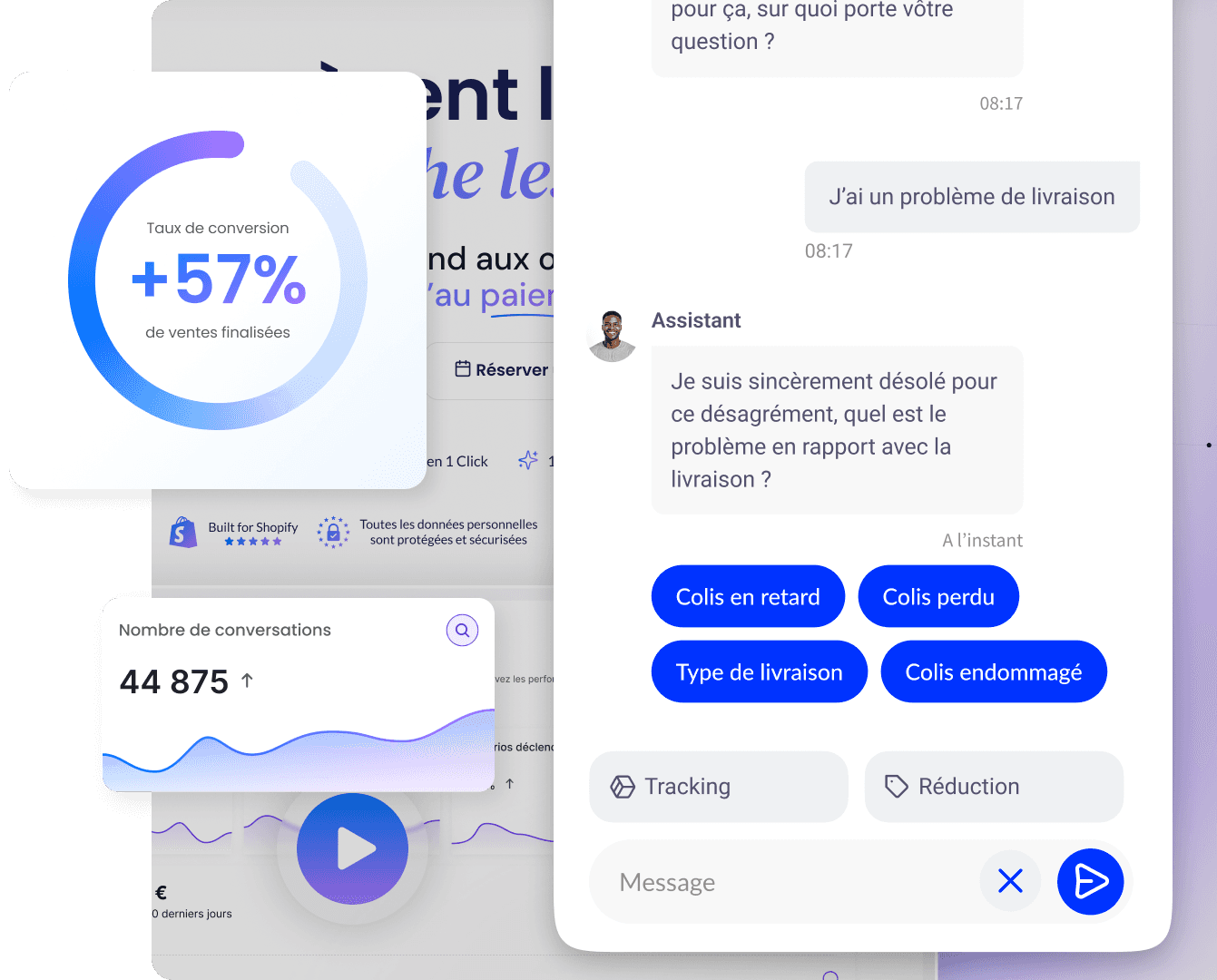
Convert over 2,000 customers on average per month with Qstomy.
The world’s 1st Shopify AI dedicated to customer conversion


Empowering 200+ e-commerce merchants
How does the llms.txt file work?
Llms.txt is a machine-readable file designed for AI. It signals to AI systems which content is available for their use and which is easy to summarize and cite. The concept is similar to that of a robots.txt file or an XML sitemap.
The file can allow or disallow different AI tools from using certain parts of a site's content. For example, an online store can block access to cart or checkout pages to prevent an AI bot from wasting time on pages of no interest to the buyer.
Conversely, the file can guide AI toward useful content such as buying guides, blog posts, or product descriptions. This allow-and-disallow function is the most frequently cited, but the primary purpose of the file is to provide content.
What structure for an llms.txt file?
The recommended structure for an llms.txt file follows a simple template in Markdown, a popular lightweight markup language. It includes a main title, a summary blockquote, sections, and links to content files.
Take the example of an online store selling sci-fi movie prop replicas. The file could start with the site name, followed by a short description such as “Premium collection of sci-fi replicas and props”.
Next, a Docs section lists links to detailed Markdown files, for instance, a spec sheet for a lightsaber replica or a guide to the best collector's items. An Optional section can contain links to the blog or tips. The file also indicates who to contact and where to find the privacy policy.
How to create Markdown product sheets for AI?
An llms.txt file for an e-commerce store can contain numerous links to Markdown versions of your product pages. These .md files are streamlined: no navigation, no JavaScript, only the essential information an AI needs to summarize, share, and cite a product.
Take the example of a product page for a replica lightsaber. The Markdown file contains a clear title, an introductory paragraph, structured sections on specifications and uses, a canonical link to the original product page, and keywords.
This approach is comparable to an XML sitemap that guides the bot to various content pages. But here, the content is simplified and directly usable by the AI, which makes its job easier and increases your chances of being cited.
What is the structure for a Markdown product sheet?
A well-designed Markdown product sheet follows a simple structure. It starts with a clear title, followed by a short introductory paragraph that explains what the product is and why it matters. Then, structured sections detail its features and uses.
For a lightsaber replica, one would describe the green LED blade, the metal hilt, motion-sensitive sound effects, the display stand, and the official license. It should also specify who the product is intended for: collectors, cosplayers, gift buyers, or enthusiasts.
The file ends with a canonical link to the original product page, keywords like "lightsaber, Luke Skywalker, replica, collection," and an update date. This structure allows the AI to quickly understand the product and recommend it accurately.
How does llms.txt help AIs recommend your products?
One of the major strengths of llms.txt is helping AIs at the interface stage, that is, when a user interacts with a chatbot. A customer asks a question about a product, the AI visits your site, reads the Markdown file, and responds quickly with accurate information.
Think of the product Markdown file as a revision cheat sheet for the AI. Instead of browsing your entire site and parsing complex pages, it finds a simplified and factual version of your content. It can then cite your store as a source.
This increases your chances of appearing in AI assistants' shopping recommendations. A customer who receives a clear and sourced response is more likely to visit your site and complete a purchase.
How do I set allow and block rules?
The llms.txt file allows you to define allow and disallow rules for AI bots. For example, you can block access to cart and checkout pages, which offer no value for AI to understand your products. This prevents it from wasting time on irrelevant pages.
Conversely, you can allow and even encourage access to your buying guides, blog posts, and product sheets. This content is valuable for AI looking to answer consumer questions.
This authorization feature sends a strong signal. It tells the AI which content is useful and relevant. It is a way to guide bots toward what truly matters for your business and your customers.
What is the difference between llms.txt, robots.txt, and an XML sitemap?
Llms.txt is inspired by mechanisms well known to webmasters. Robots.txt tells web crawlers which parts of the site to crawl or ignore. An XML sitemap lists important pages to facilitate indexing. Llms.txt combines these ideas for language models.
Like robots.txt, it can allow or disallow access to certain areas. Like a sitemap, it offers a list of relevant content. But it goes further by directly providing simplified versions of your pages, ready to be summarized and cited.
This approach makes things easier for AIs, which do not have to interpret complex pages. They find a clear and factual version of your content, which increases your chances of being referenced in their answers.
What are the limitations of llms.txt?
The llms.txt standard is still recent and non-binding. AI bots are not obligated to follow the directives it contains. It is a signal, not a guarantee. Some major players have not yet officially adopted it.
There is also a risk of content duplication. If your Markdown files differ significantly from your product pages, the AI could cite outdated or inaccurate information. It is therefore essential to keep these files updated and consistent with your website.
Finally, llms.txt does not replace a traditional SEO strategy. It is a complement to improve your visibility with answer engines. You must continue to optimize your pages for Google and produce quality content.
How to Integrate llms.txt into Your Marketing Strategy
Llms.txt is part of a broader digital marketing and SEO strategy. It complements your efforts to attract traffic via traditional search engines and new answer engines. It is an additional building block to be visible where your customers are searching.
To be effective, it must be aligned with your existing content. Your product sheets, buying guides, and blog articles must be of high quality and up to date. The llms.txt file merely facilitates their reading by AI.
Think of llms.txt as a bridge between your website and AI assistants. It enables these tools to understand your offering and recommend it to consumers. It is an opportunity not to be overlooked to prepare for the future of e-commerce.
How does Qstomy complement your visibility strategy?
Qstomy, the AI agent for Shopify, completes your visibility strategy by converting traffic into sales. When a customer arrives at your store following an AI recommendation, Qstomy guides them throughout their purchasing journey.
It directs them toward purchasing with personalized recommendations, complementary product suggestions, and intelligent cart management. It also handles package tracking and answers customer service inquiries, which reassures buyers and reduces cart abandonment.
With more than 100 merchants supported, Qstomy improves conversion and customer satisfaction. It turns the interest generated by your presence in AI responses into concrete orders, all while building customer loyalty through responsive, personalized support.
What checklist should you follow before publishing your llms.txt file?
Before publishing your llms.txt file, make sure your content is ready. Here is a checklist to guide you.
In brief
Structure: create a Markdown file with a title, a summary, and Docs and Optional sections.
Content: prepare Markdown versions of your product sheets and buying guides.
Rules: allow access to useful content and disallow cart and checkout pages.
Updates: keep your files up-to-date and consistent with your web pages.
FAQ
Does llms.txt replace traditional SEO? No, it is a complement to improve your visibility with AI, not a substitute for your Google strategy.
Are AIs required to follow llms.txt? No, the standard is non-binding. It is a signal indicating to bots which content is useful.
Should you create a Markdown file for every product? It is recommended for key products, but you can start with your bestsellers and most viewed guides.
To go further: Integrating customer service answers into an e-commerce SEO strategy useful to customers - Qstomy, How to optimize an e-commerce site for Google (step-by-step guide) - Qstomy, What is Google Shopping for e-commerce? Definition, feed, and value for an online store - Qstomy, How to use an AI chatbot to compare two products in your store? - Qstomy, Can you use Wix for an e-commerce site? - Qstomy, Detecting site information gaps through support tickets - Qstomy, Digital marketing strategy: complete guide for online businesses - Qstomy.

Enzo
October 1, 2026